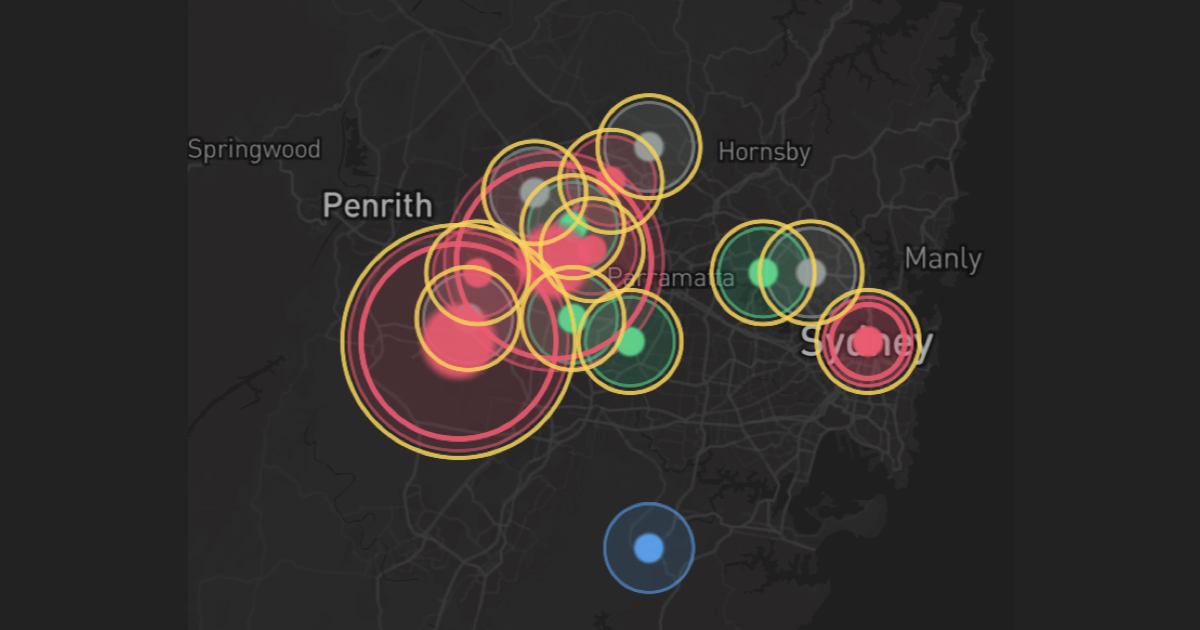
Australia is emerging as a key jurisdiction for the build-out of hyperscale compute capacity.
Put simply, Australia has resources that hyperscalers need: land, critical minerals, renewable energy pathways, good governance, plus proximity to Asian markets. Hyperscalers also give access to what Australia needs: enduring relevance as a strategic ally to the United States. The more important Australia can become to US hyperscalers, the more likely it is that the country will be protected and valued during uncertain times ahead.
This means is that Australia has a very interesting ‘AI Stack’ being built out, and at breakneck speed. The ‘Stack’ describes the different layers needed for this technology to actually work. It builds upwards from critical minerals through to land, water and energy for data centres, trustworthy governance regimes to operate in, and the compute capacity they support, through to on-site pre-training of hyperscale models, and the AI tools and digital workflows they enable.
The Australian Data Centre Map is designed as a living atlas monitoring the build out of data centre and compute capacity across Australian jurisdictions. With the build out happening at speed, the roll-out is characterised as a ‘super cycle’ - not only of data centre investment but also of the enabling regulatory and governance conditions facilitating the build out.
Data Centres Sovereignty Tracker
The map itself, with the methods, citation and licence behind it.
Key dimensions featured in the map include:
- Investment Model: Ownership (Australian, Foreign, JV, Gov-backed, Other), Owner Country (Australia, US, China, Singapore, Japan, Switzerland, Other), Capital Type (Hyperscaler, Private equity/infrastructure fund, Listed/REIT, State-owned, Private, Other), Relationship to Sovereign Wealth or Super Fund (Direct Stake > 30%, Land owner, via third party)
- Resource Use: Water Risk, Energy Source (e.g. on site renewables, contracted renewables, grid/mixed, grid/coal or gas heavy)
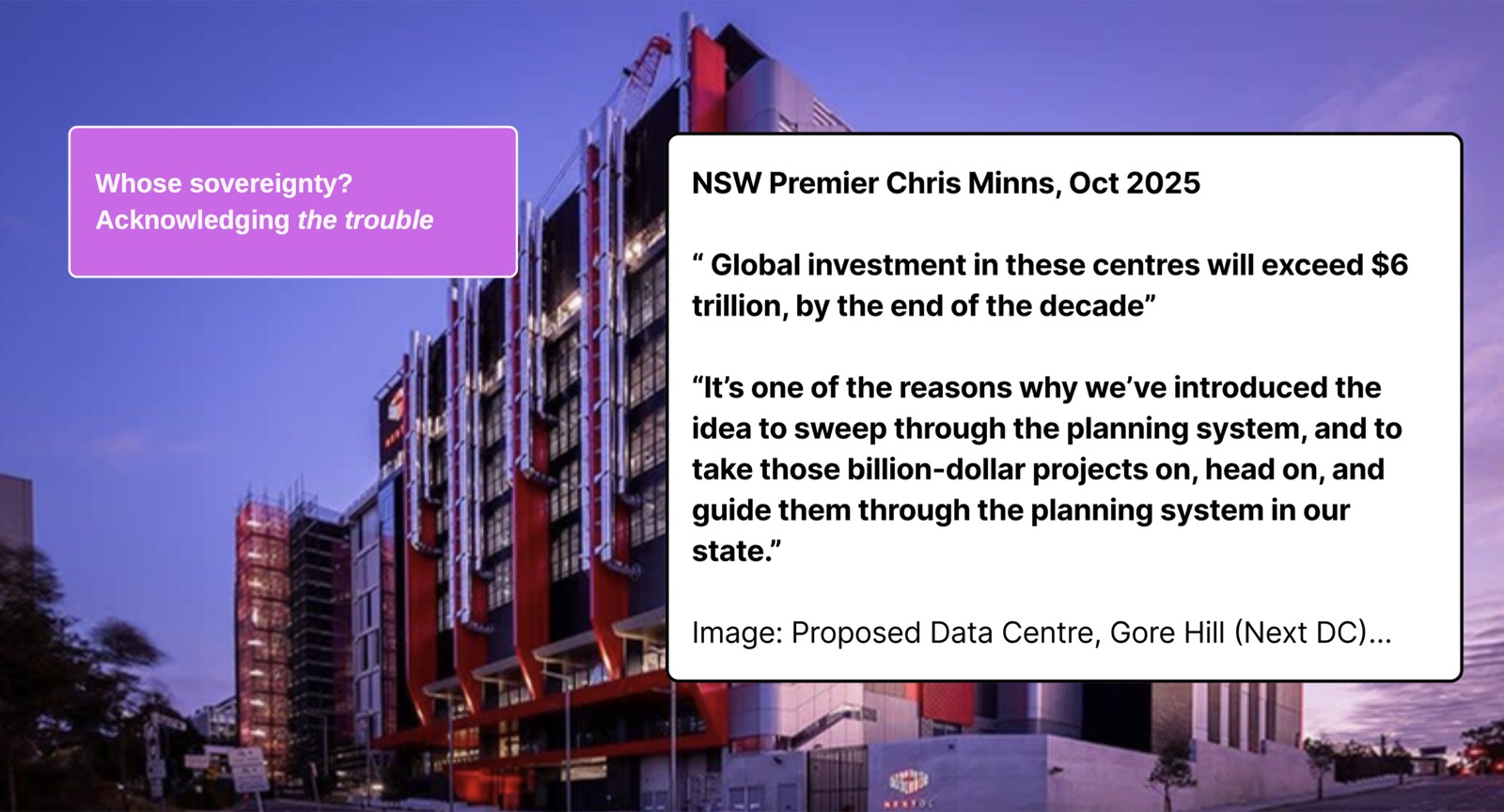
- Planning Priority: State Fast Tracked Development (no formal community consultation or local community input); Contested by local community (active or emerging community opposition, tracked through the planning pathways: public-exhibition submissions and objections, council minutes and motions, merit appeals, parliamentary petitions, and media or FOI)
- Development Status: Operating, In-Pipeline (by development stage), Not Recorded
- Infrastructure Type: Data Centre (predominant), with emerging focus on mines and refineries/processing facilities (note, only a light touch for now)
- Global Supply Chain: Illustrative flows from each site to where its inputs are made or processed. Green rings mark onshore processing.
Why do this at all?
At a basic level the map is designed to monitor how decisions are being made about data centre developments. This includes making transparent what data and governance frameworks sit behind development approvals, and whether or not this data is publically-available or reportable.
Ultimately, the map aims to make more transparent the conditions shaping Australia’s twenty-first century digital infrastructure.
How has this been created?
The Data Centres Sovereignty Tracker has been established by Dr. Sarah Barns, a digital urbanist, strategist, civic tech builder and researcher whose work on digital urbanisation examines how platform ecosystems redefine conditions of public value in a digitally-intensive world.
The tracker is a project delivered through the Civic Interplay initiative, established with research funding under the RMIT Vice Chancellor’s Fellowship Program and based at the RMIT Centre for Urban Research. Civic Interplay is also a part of the Future Literacies + Methods Lab at Utrecht University, The Netherlands.
Central to the development of the Data Centre map is the use of agentic-research tools. The methodology deliberately foregrounds the adoption of AI tools to expand access and engagement with relevant data and insights shaping conditions of agentic-urban transformation.
Broadly, the methodology aims to establish ‘civic AI’ capabilities, whereby AI tools are leveraged for improved transparency and civic knowledge practices.
Connecting AI ecosystems to resource flows & planning frameworks
Adopting a platform systems lens, data centres are revealed to operate within interconnected AI ecosystems of material, financial, governance and resource flows, and at multiple scales from global to national, from state-based planning and access regimes to local resource flows and community impacts.
Notably, this lens disputes the current framework for AI policy and governance being adopted by the Albanese Government in Australia. Currently, an ‘AI ecosystem’ is defined by agencies such as the National Artificial Intelligence Centre (NAIC) as comprising startups; small-to-large-sized companies; universities; education, training and research institutes; industry organisations; and public sector agencies engaged in developing and applying AI technologies.
However, this definition ignores the material conditions, resource flows and planning frameworks that underpin the roll out of the AI Stack across Australia. It focuses on the computational infrastructure and its beneficiaries, but not on the material conditions that support this infrastructure. This is not simply about capturing the environmental impacts of AI and data centres; it is recognising the different forms of value underpinning and shaping AI systems, and how they impact Australian communities, now and in coming decades.
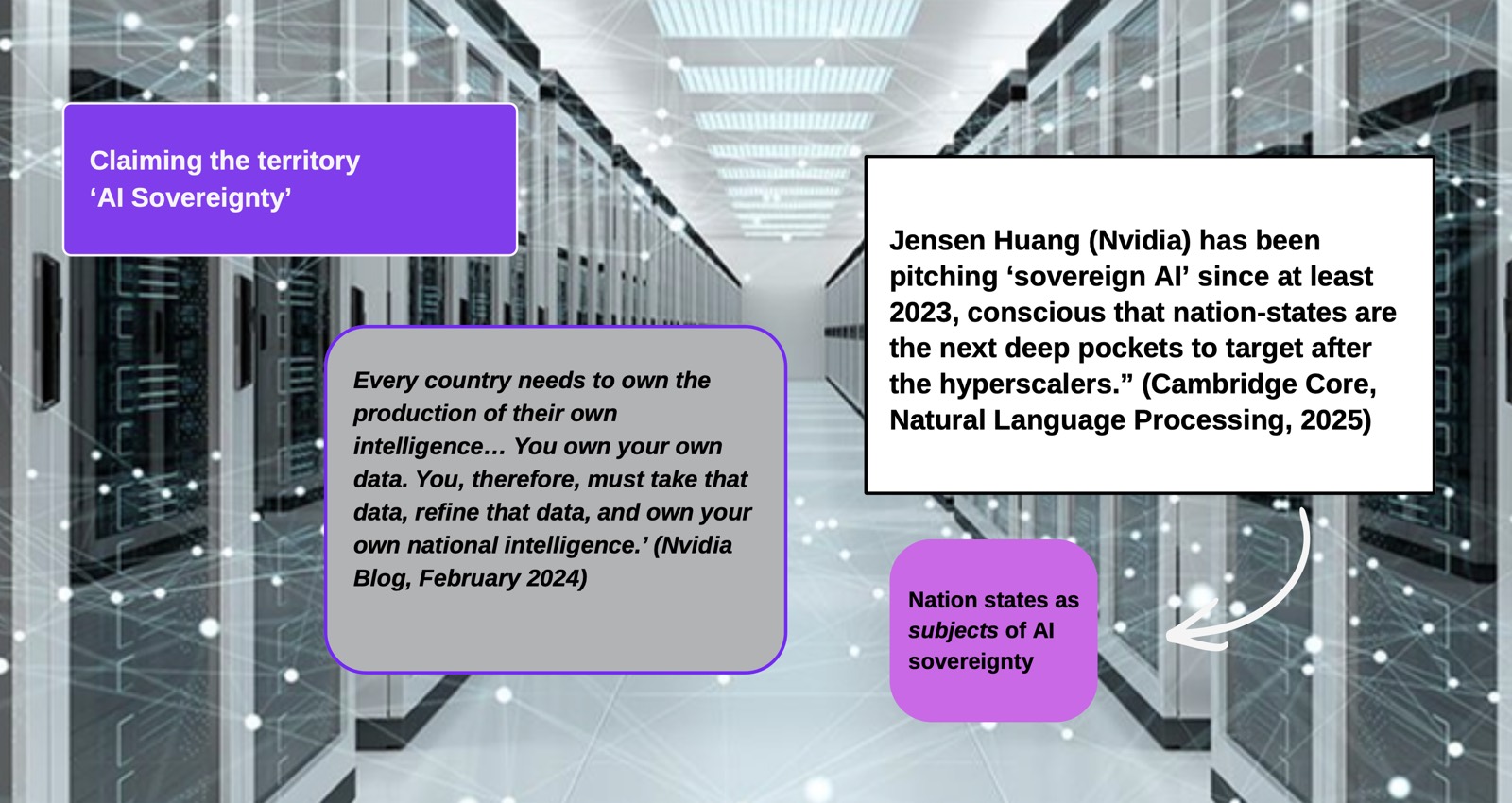
A narrow focus on AI ecosystems based around computational infrastructure and applications is particularly problematic during an era when ‘sovereign capability’ or ‘AI sovereignty’ is an increasingly central goal for AI policy.
In its 2024 submission to the Senate Inquiry on Artificial Intelligence, the Commonwealth Scientific and Industrial Research Organisation (CSIRO) described sovereign capability as the ability of [a] country’s governments, industry and society to use technologies productively and effectively to meet their needs in the absence of any inputs sourced from other countries. With respect to AI, sovereign capability includes the availability (and scalability) of high performance computing infrastructure, secure data storage, skilled technical workers, datasets for training/adapting AI models and the ability to manage/regulate AI model use in Australia.[18]
However, sovereign capability also needs to include the material resource flows underpinning AI ecosystems and their impacts.
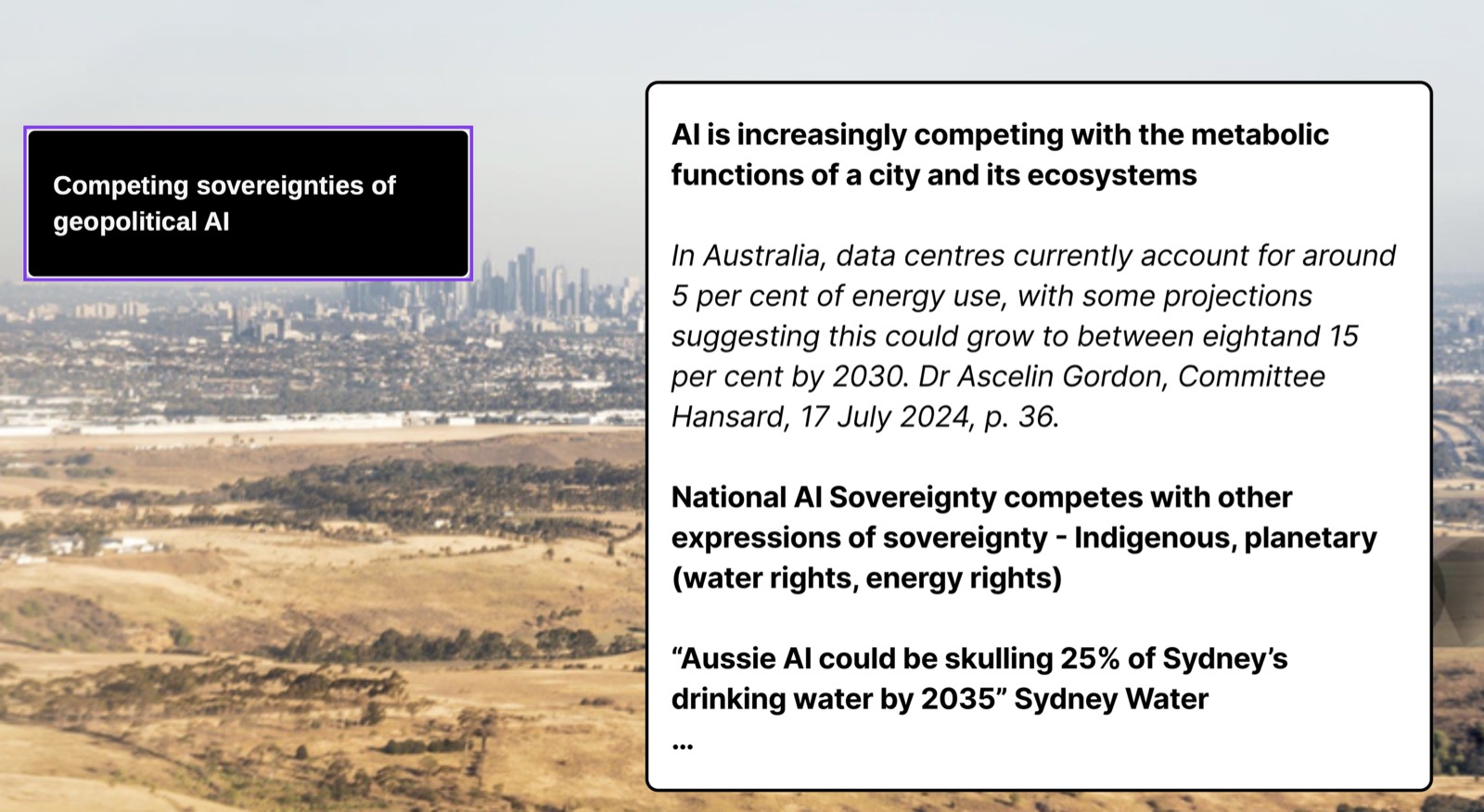
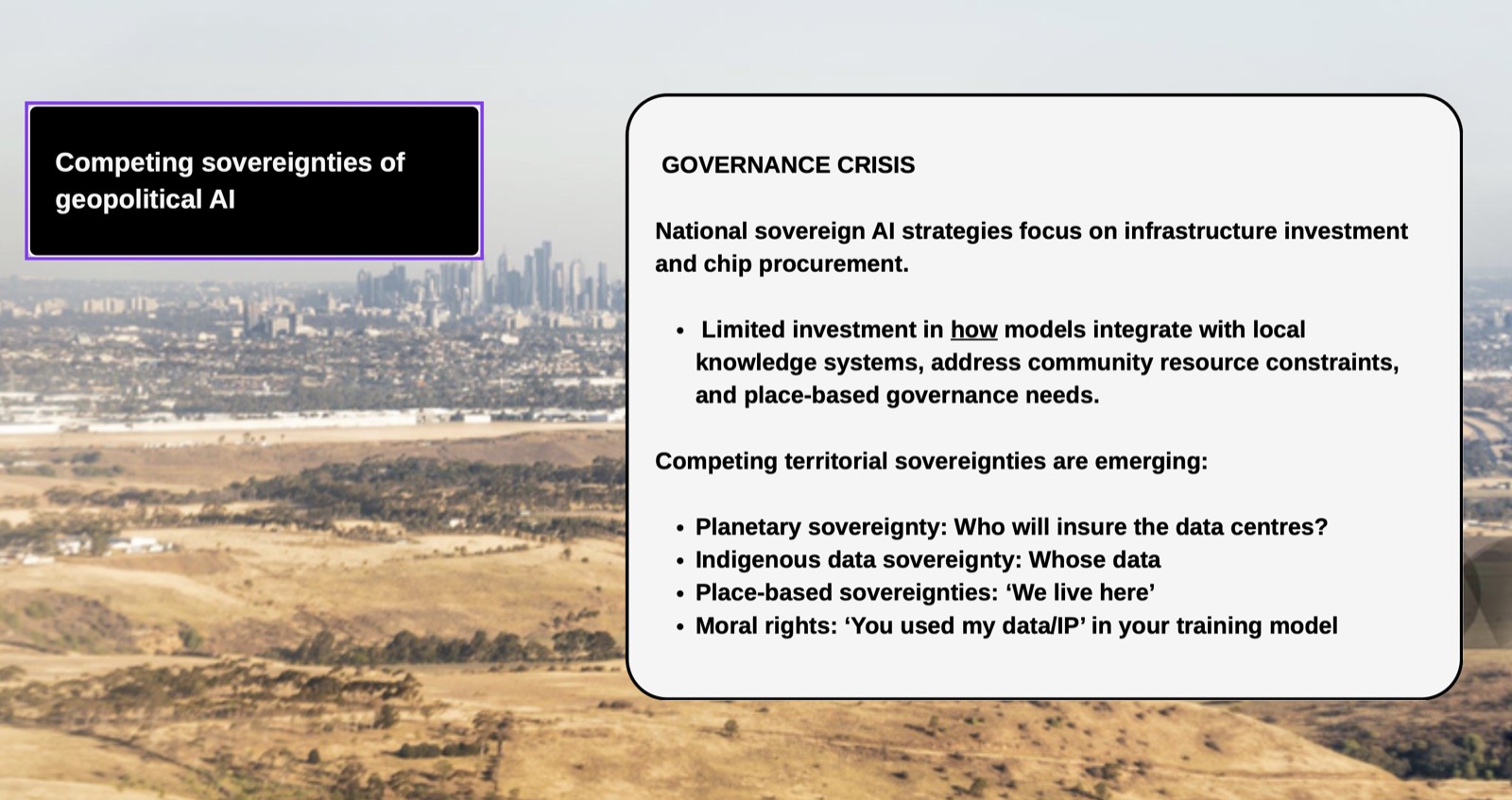
The Data Centres Sovereignty Tracker adopts this broader view by synthesising four distinct modes of ‘sovereign capability’ that must be recognised during this super-cycle wave of hyperscale AI development.
- National AI Sovereignty: Australian policy frameworks shaping AI infrastructure, including the ability of the Australian Government to make decisions that benefit the long-term safety, resilience and prosperity of all Australians;
- Place-based sovereignty: The governance frameworks that enshrine the rights of place-based communities to access land, clean water and affordable energy;
- Indigenous sovereignty: Indigenous sovereignty was never ceded when the British Empire settled on Australian soil. This ‘unsettled’ nature of sovereignty in Australia is reflected in multiple forms of land rights tenure, from land councils to native title and community land trusts, as well as emerging conventions for indigenous data sovereignty;
- Digital sovereignty: The ability for individuals and governing bodies to maintain autonomy over how their data is used, stored, and monetised.
Data Sources & More information
The architecture of the first release is below.
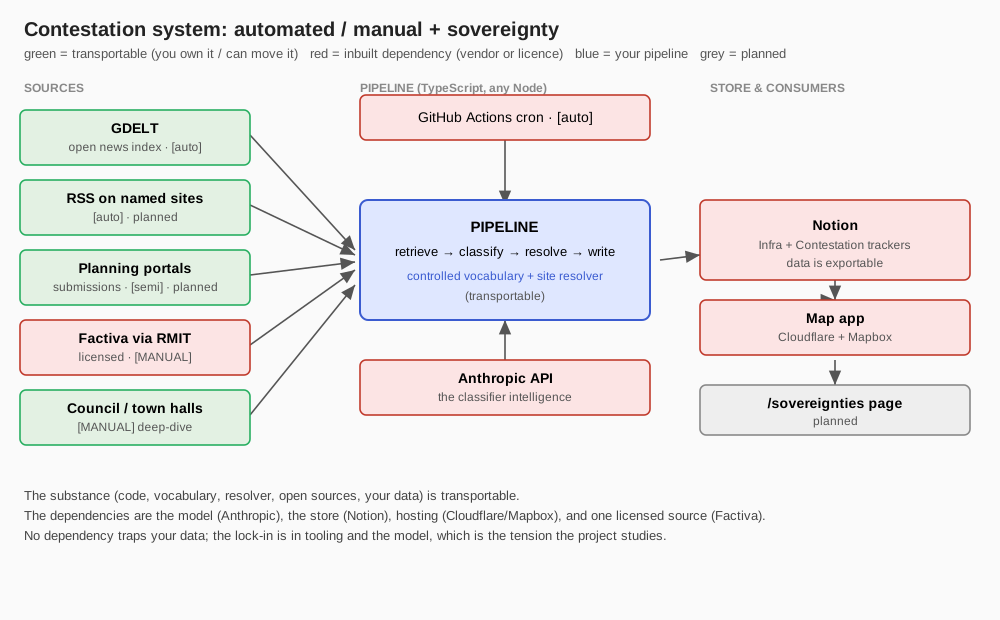
A Notion tracker feeds a live API that renders the map. Built with Claude Code, with compute costs logged recursively.
Contributions welcome
If there are errors or blind spots please let me know. You can use this form to fill in gaps or send an idea.
The interpretive lens
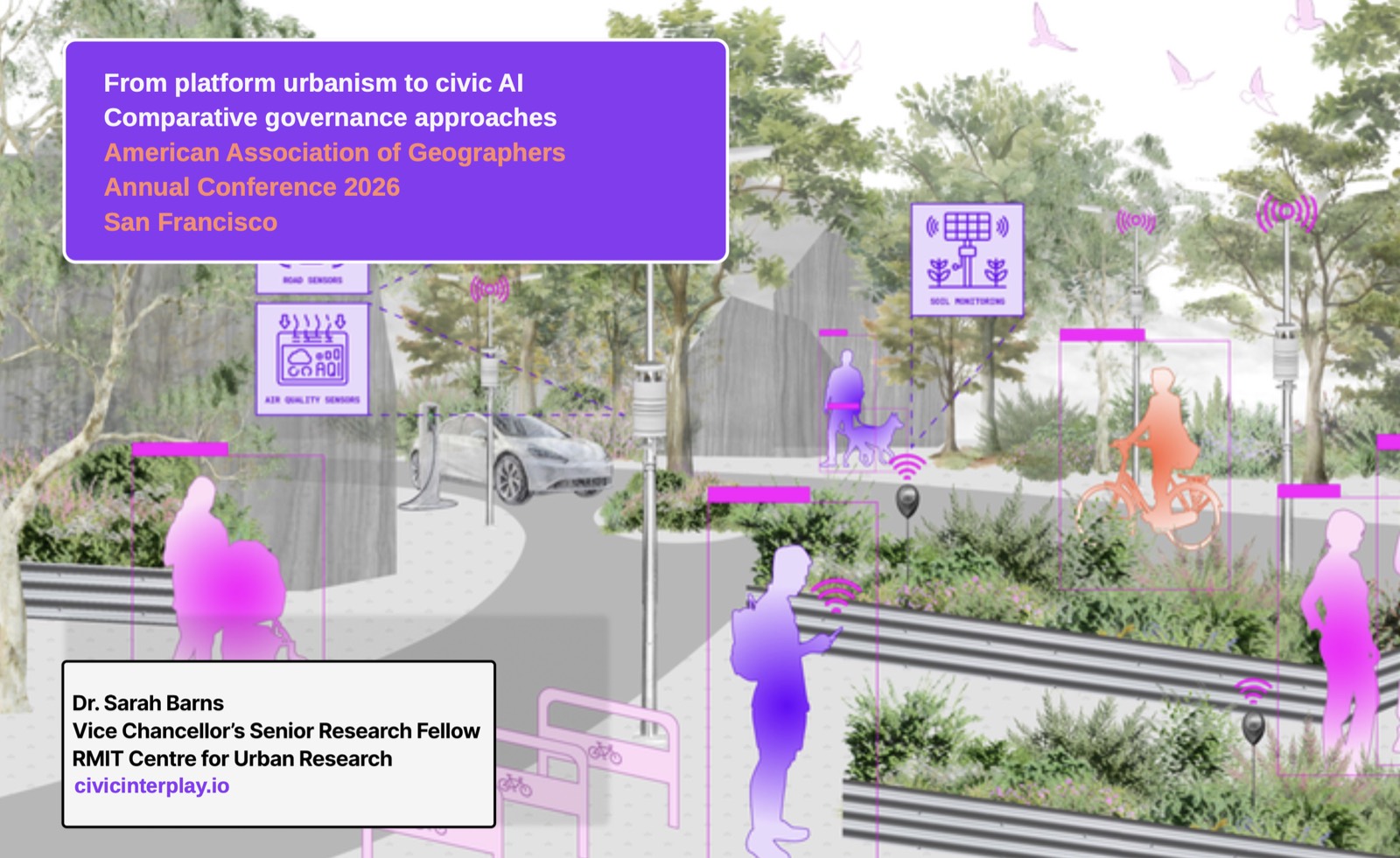
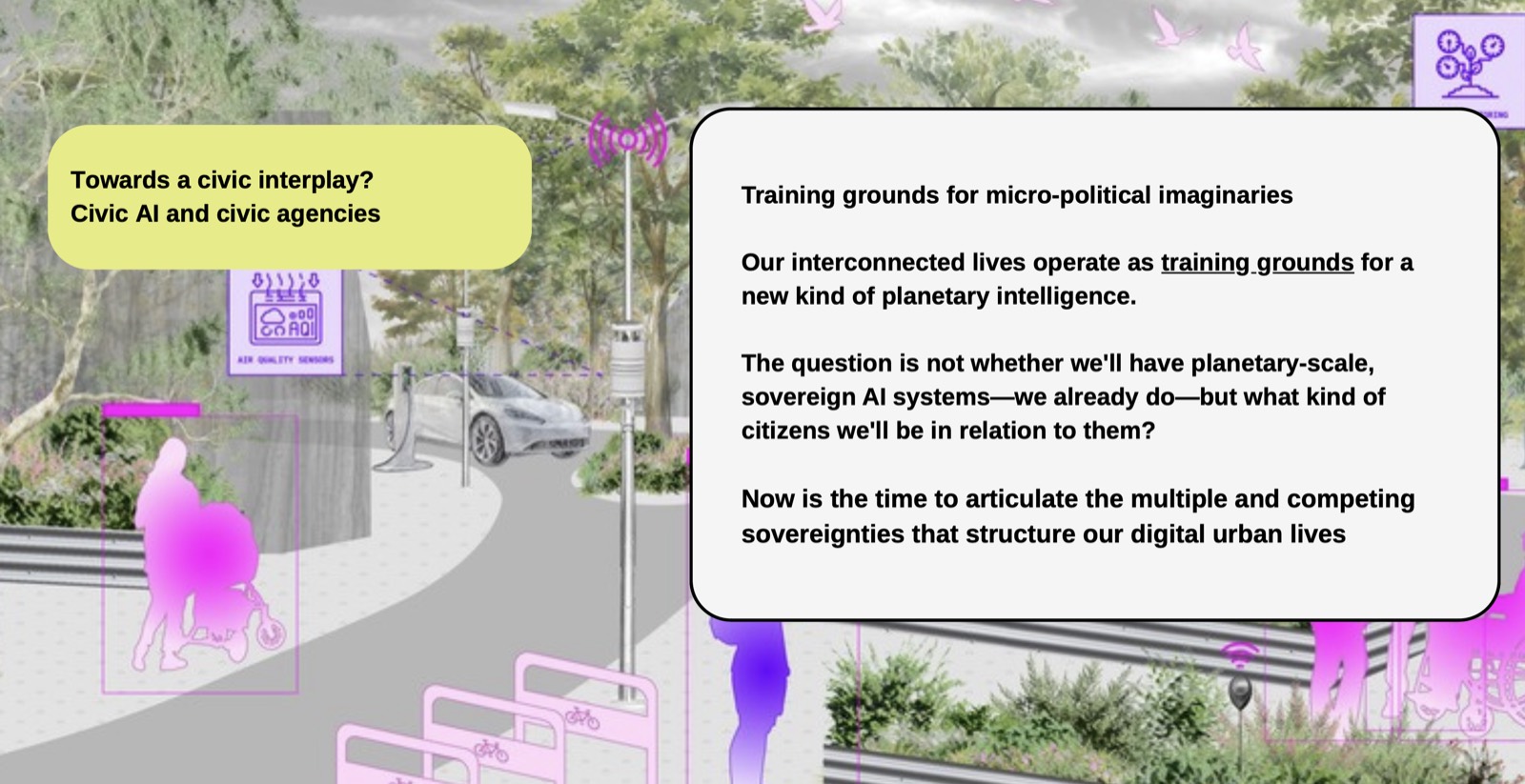
The living atlas gathers different ways of seeing the claims of digital sovereignty as they are made infrastructural across Australia during 2026. The practice was first presented as a talk at the American Association of Geographers (AAG) Annual Conference, San Francisco, April 2026.
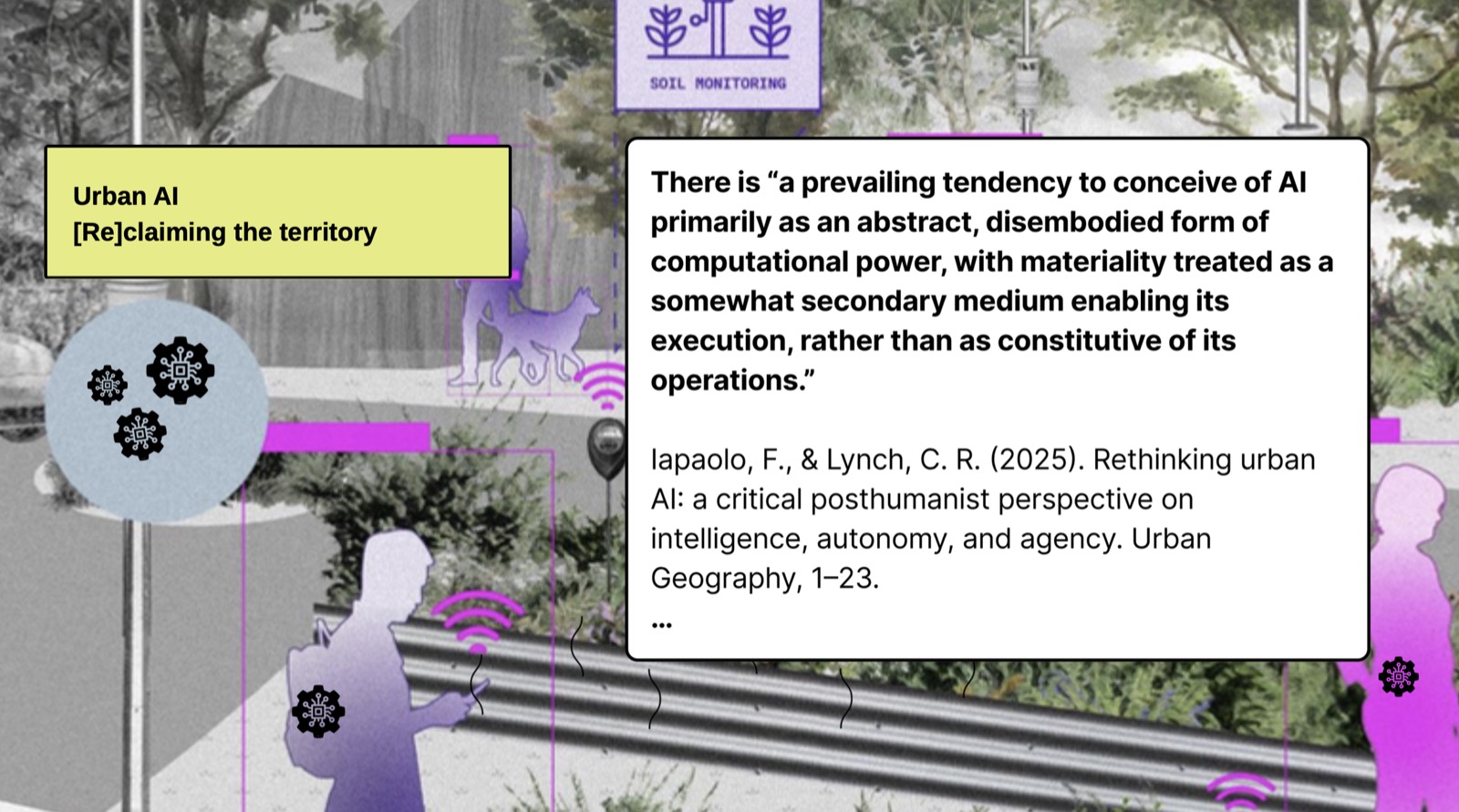
Some selected slides from this talk are below.
Submission to the Senate Inquiry into AI and Data Centres
Fourteen recommendations on disclosure, public exhibition, benefit sharing and sovereign capability, lodged 31 August 2026.
First published 29 June 2026, ‘About’ page amended 16 August 2026.